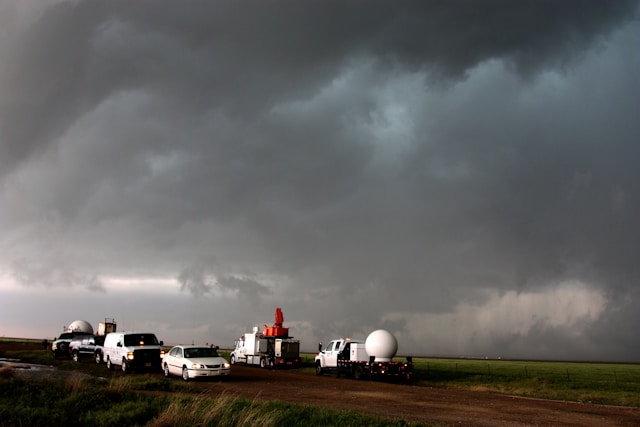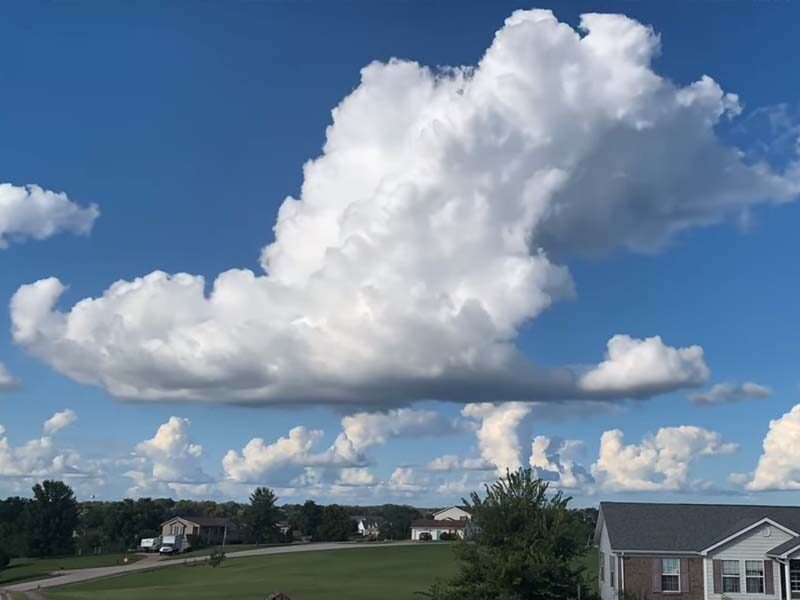
How does accurate weather and climate research affect society, policy-making, and environmental management? Understanding weather patterns and long-term climate trends is critical for preparing for natural disasters, managing water resources, and addressing global warming. Academic studies in this field provide insights into the mechanisms driving extreme weather, temperature variability, and precipitation changes. With climate change accelerating, precise interpretation of meteorological data has become increasingly important. Researchers aim to reduce uncertainty in predictions and offer evidence-based recommendations for governments, industries, and local communities.
The discipline combines observational science, statistical modeling, and computational techniques, requiring students and professionals to have a strong foundation in physics, mathematics, and data analysis. By examining both historical and real-time datasets, climate scientists can identify anomalies, anticipate trends, and develop adaptive strategies to mitigate environmental risks. The academic rigor of this field with WirSchreiben ensures that findings are reproducible, verifiable, and applicable to practical challenges in both local and global contexts.
Key Data Sources and Methods in Weather and Climate Studies
Weather and climate research relies on diverse sources to generate reliable datasets. Primary sources include meteorological stations, satellites, ocean buoys, and historical archives. Satellite instruments provide global coverage of temperature, humidity, cloud formation, and atmospheric composition. Ground-based stations offer high-resolution, localized data, critical for validating large-scale models. In addition, climate reanalysis datasets combine observations and numerical models to produce comprehensive historical records.
Researchers employ a variety of methods to process and interpret these data. Statistical analyses, such as trend detection and regression modeling, are widely used to identify significant changes over time. Machine learning and artificial intelligence techniques are increasingly applied to detect patterns, predict extreme events, and enhance model accuracy. Computational simulations of climate systems, including General Circulation Models (GCMs), allow scientists to project future climate scenarios under different greenhouse gas emission pathways.
Typical steps in the methodology:
- Data acquisition: collecting raw measurements from multiple sources.
- Preprocessing: cleaning and standardizing datasets.
- Analysis: applying statistical and computational models.
- Validation: comparing predictions with observed data.
- Interpretation: deriving insights to support policy or academic conclusions.
Challenges in Data Analysis and Interpretation
Despite technological advancements, weather and climate research faces significant challenges. Large-scale data can be inconsistent, incomplete, or subject to measurement errors. Spatial and temporal gaps in datasets make long-term trend analysis difficult, especially in regions with limited observational infrastructure. Model uncertainty, calibration errors, and assumptions about physical processes contribute further complexity.
- Missing or incomplete datasets: gaps in satellite records or historical logs.
- Temporal and spatial inconsistencies: irregular sampling intervals, varying instruments.
- Model uncertainty: differences between predicted and observed outcomes due to model assumptions.
Researchers address these challenges by cross-validating multiple datasets, integrating observational data with reanalysis products, and continuously updating models to reflect improved understanding of atmospheric physics. Interdisciplinary collaboration, combining meteorology, oceanography, and computational sciences, enhances reliability.
Methodological transparency, documentation, and reproducibility are essential to ensure that findings are scientifically robust and actionable. Additionally, ethical considerations, such as responsible reporting and clear communication of uncertainty, are increasingly emphasized in climate publications and policy recommendations.
Tools and Techniques for Enhancing Research Accuracy
Modern climate research employs specialized tools to improve the accuracy of data analysis. Software like R and Python supports statistical computations, while GIS platforms enable spatial analysis of climate phenomena. Neural networks and machine learning algorithms identify complex patterns and predict extreme weather events.
| Tool | Purpose | Benefit |
| R | Statistical analysis | Efficient trend detection, hypothesis testing |
| Python | Data manipulation & modeling | Flexible scripting for large datasets |
| GIS | Spatial data visualization | Maps and regional impact assessment |
| Neural Networks | Pattern recognition & forecasting | Improved prediction of rare events |
Integration of multiple data sources, such as satellite imagery combined with ground measurements, reduces uncertainty. Researchers with a help WirSchreiben can produce high-resolution climate maps, simulate scenarios, and quantify confidence intervals for predictions. Effective use of these tools supports evidence-based decision-making in disaster preparedness, agriculture, and urban planning.
Case Studies and Exemplary Research
Numerous academic studies illustrate the application of data analysis and interpretation in climate research. For example:
- University of Reading, UK: Analyzed extreme weather patterns in Europe, integrating satellite and historical station data to predict flood risks.
- MIT, USA: Developed high-resolution climate models to forecast regional temperature anomalies across North America under different emission scenarios.
- University of Hamburg, Germany: Conducted long-term rainfall trend analysis in Northern Germany using reanalysis datasets and statistical modeling.
These case studies demonstrate rigorous methodologies, careful data validation, and interdisciplinary collaboration. They highlight the importance of combining observational data with computational models to address complex climate questions. Each study emphasizes transparency, reproducibility, and the ability to inform both academic discourse and practical policy measures.
Implications for Future Research
Weather and climate research is a critical academic field that influences societal planning, policy decisions, and environmental management. Accurate data analysis and interpretation remain central to understanding global trends and extreme events. As computational methods, satellite technology, and machine learning continue to advance, researchers can refine predictions and expand the scope of investigations.
Collaborative, interdisciplinary approaches strengthen findings and improve applicability. Future studies with WirSchreiben will increasingly focus on integrating diverse datasets, minimizing uncertainties, and translating results into actionable recommendations for governments, industries, and communities. The discipline’s ongoing evolution ensures that academic research continues to contribute meaningful insights into climate variability and long-term environmental change.